Brand & identity
A shared reference for a calm, clear and welcoming Open ADHD. For everyone introducing the project, writing for it or shaping its next small step.
Brand assetsVersion 2.0
Open ADHD
A little help with the everyday.
01Our brand family
OpenJung Open ADHD
Open ADHD belongs to OpenJung. It is the everyday support, learning and self-reflection project in the OpenJung brand family.
OpenJung brand guideWe share curiosity, clear explanations and respect for individual experience. Open ADHD keeps its own name, organic mark and warm plum palette. Each project’s purpose, privacy practices and licensing terms are stated separately; brand affiliation does not imply clinical validation or endorsement.
02Name & purpose
Write Open ADHD with one space and ADHD in capitals, in every language. Use open-adhd.org in public links. OpenADHD, Open-ADHD and Open ADHD.org are not the displayed brand name. Keep OpenJung as one word, with a capital O and J, in the parent credit.
Everyday support, learning and reflection
Open ADHD is a free OpenJung project for adults exploring attention and everyday life. It offers practical tools, learning resources and a space for self-reflection, without an account. Personal answers and health records are processed and saved in the browser.
The original 18-question ADHD reflection has not been independently clinically validated and is not the ASRS. Its answer frequencies do not establish a diagnosis, probability, subtype or clinical severity. Brand messages must preserve this boundary.
03The mark
An open, organic loop with a small apricot accent. Soft edges and space at the center express room to pause, notice and begin again. It is a project symbol, not a clinical seal.
Open ADHD
Open ADHD
Small sizes
- Use the existing vector geometry with the Open ADHD wordmark. Keep the loop, accent and open center intact; do not stretch, rotate or add effects.
- Leave at least one quarter of the mark’s width as clear space. Use a symbol of at least 24 px in the interface; the supplied favicon is intended for browser tabs at 16–32 px.
- Use the light mark on dark surfaces, with the same apricot accent. App icons keep their supplied background and inset. Avoid using the symbol as a diagnosis badge or professional endorsement.
04Color & typography
Grounded color, in light and dark
#584769 plum-700 #EC8238 apricot-500 #FEFDFB cream-50 #626956 moss-600 #3E3347 plum-900 #EEEBF2 plum-100 Plum carries the identity and readable actions; apricot adds warmth. Use sufficiently dark text on light surfaces and light text on dark surfaces. The bright accent is not a small-text color or a sole signal for a state. These swatches come from the same palette as the interface.
Human headlines, easy reading
Fraunces
Aa & 01
Open ADHD
Nunito
Aa & 01
A little help with the everyday.
Fraunces gives the wordmark and Latin display text a human, editorial character. Nunito supports body text and controls. Both are served by this site, with Noto fonts for the relevant writing systems. Language-specific and dyslexia-friendly reading preferences take priority over decorative typography.
Keep a quiet hierarchy, generous spacing and softly rounded surfaces. Make controls at least 44 px high, preserve visible keyboard focus and support reduced motion. Avoid automatic animation in the guide and communicate meaning with words as well as color.
05Voice & trust
Warm, specific and respectful. Offer a manageable choice, describe what a tool can do and leave the decision with the person. Support self-understanding without assigning an identity or promising an outcome.
Use
What is one small step you could try? You can change the suggestion or leave it for later.
Avoid
Your score proves you have ADHD. This method will fix your productivity.
Separate a person’s observations, educational sources and clinical conclusions. Explain limitations close to the claim. Do not turn a source link, a friendly illustration or the OpenJung credit into evidence of clinical review.
Say precisely what stays local: personal answers and health records. Google Analytics measures page visits but does not receive local records; Google Signals and ad-personalization signals are disabled. There is no health-data upload; hosting and analytics involve ordinary network requests, and browser storage is not encrypted by the application. Avoid an absolute promise of zero data or zero risk.
06Brand assets
Current files used by the site. The SVG adapts to light and dark browser themes; PNG icons include the background and breathing room intended for their size.
- Download
Symbol & adaptive favicon
SVG · 128 × 128 - Download
App icon
PNG · 512 × 512 - Download
Apple touch icon
PNG · 180 × 180 - Download
Social card
PNG · 1200 × 630


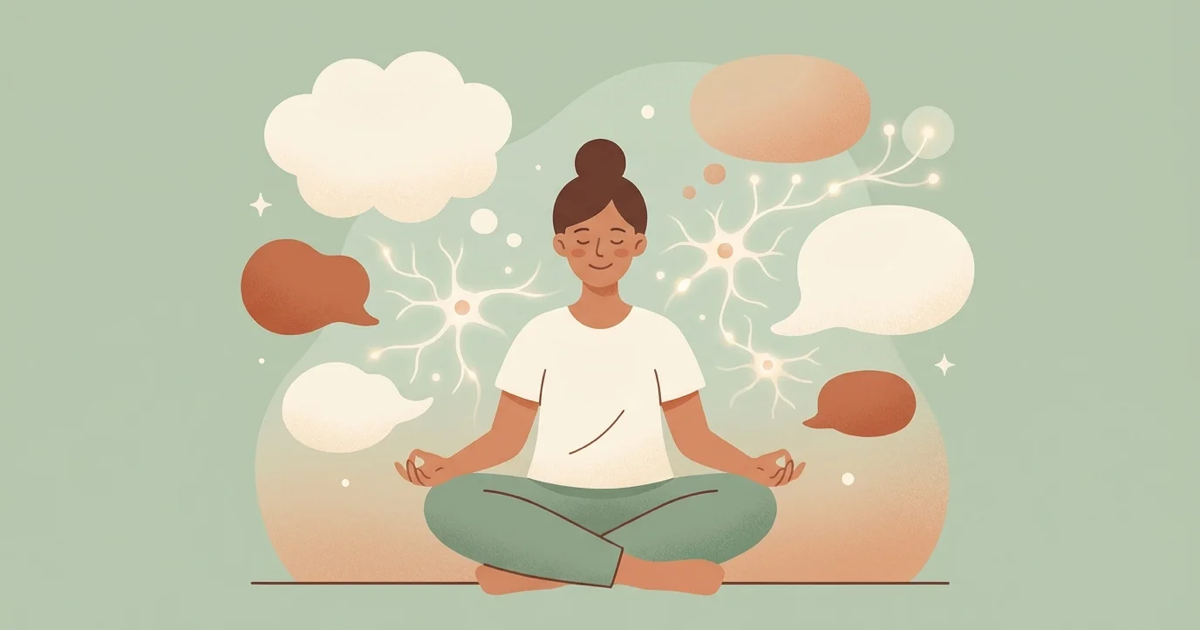
Introduce the project as Open ADHD, keep the OpenJung credit and link to open-adhd.org. Downloads do not change existing source, artwork or font licenses. The social card is a visual introduction, not evidence of a treatment or outcome.